Repair or Sell Broken? Break-Even Maths for Sydney iPhones
Cracked screen, weak battery or smashed back glass? Work out if repairing your damaged iPhone beats selling it as-is in Sydney, then get a quote.
Cracked screen? Battery dying by lunch? Back glass that looks like a dropped jigsaw? Before you bury that iPhone in a drawer, know this: a damaged phone is rarely useless, and Sydney buyers still want them. If you are wondering whether to repair first or sell broken iphone as-is, the answer comes down to simple break-even maths, not guesswork.
In this post, we will walk through why damaged iPhones keep their value in Sydney, then explain the break-even formula in plain English. You will learn where to get real repair and resale numbers before deciding. We will compare common faults: cracked screens, battery problems, back glass damage, and water or multi-fault handsets. You will also get the age and otherwise sound test, a look at selling as-is to a local Sydney buyer, and a one-line test for your own phone. By the end, you will know whether repairing pays off or whether selling as-is nets you more this week.
Why a damaged iPhone still has value in Sydney
That cracked iPhone in your drawer is worth more than you think.
Most people assume a dead or shattered handset is worthless, so it sits there for years. That assumption quietly costs money. Damaged iPhones are rarely useless, and the straight answer on selling a broken iPhone is that they sell every day.
Buyers include refurbishers who repair and resell, and recyclers who recover the materials inside, more than 95% of a phone's materials can be recovered (Recycling Near You).
Here is the mental shift. Condition changes the price you are offered, not whether anyone will buy it. Even a handset that will not power on can still attract an offer.
So searching for how to sell a broken iPhone is realistic, not hopeless. The only real question is whether repairing first earns you more than selling as-is. Sydney has a steady flow of local buyers and repair shops, so both paths are open, and neither is a dead end.
The break-even formula, in plain English
So here is the whole decision in one line. Repair only if:
resale after repair minus as-is offer > parts plus labour plus risk buffer
Resale after repair means what a working version of your exact model, age and storage would realistically fetch today, not what you paid. What actually changes the price walks through the factors that shift that figure.
The as-is offer is what a Sydney buyer will pay right now for the phone as it sits, faults and all. That is the number everything else gets compared against.
Parts plus labour is your full repair quote. The risk buffer covers what the quote leaves out: a second fault found once the phone is opened, an aftermarket part that does not behave like the original, and the chance the repair never fully restores function.
We have deliberately left dollar figures out. Quotes and resale values move with model, storage, condition and the week you sell, so get live numbers for your own handset and plug them in.
Where to get real numbers before you decide
Two quotes, same day, then decide. Start with a written repair quote from a repairer who has actually inspected your model, not a rough figure given over the counter.
Ask three questions before committing: what happens if a second fault appears once the phone is opened, is the part genuine or aftermarket, and does the quote include any warranty on the work. That last one matters, because consumer guarantee rights can outlive the manufacturer warranty, as the ACCC explains for broken but out of warranty devices.
For the as-is number, be honest. Describe every fault, attach photos and include battery health, so the offer reflects your real handset. On the prep side, three things to check before you ring covers what to sort first.
Compare both figures on the same day where possible, since prices and offers can change.
Rather skip the repair loop? Request a quote for your damaged iPhone and use that as your as-is number.
Cracked or shattered screen: usually the best case for repairing
With both numbers in hand, the screen is the fault most likely to come out ahead.
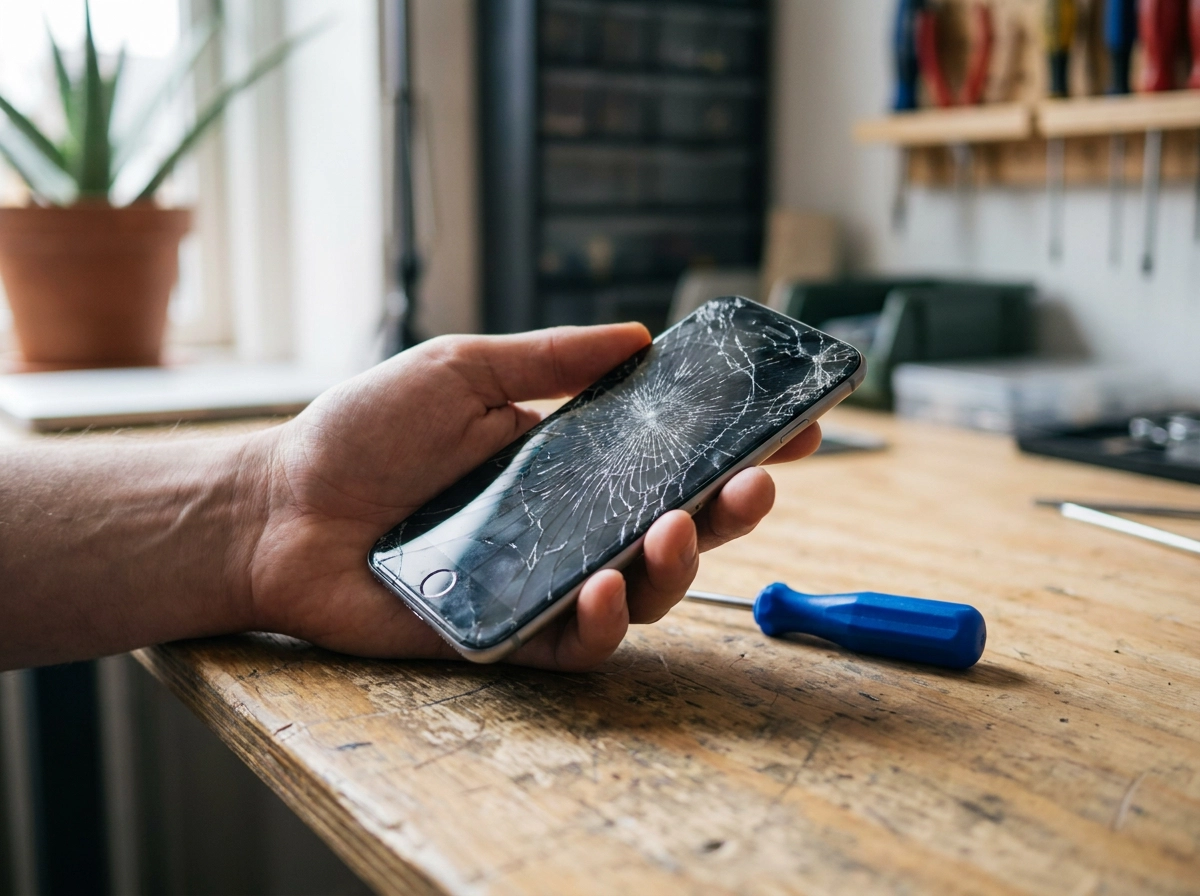
A cracked screen is one of the most common iPhone faults, and the phone underneath often works perfectly. That is why a damaged-screen handset holds more value than owners expect.
Because everything else is sound, a screen repair is the fault type most likely to pass the break-even test on a current or recent model. Ask whether the quote is for a genuine display or an aftermarket one. Aftermarket is cheaper but may not match the original display's behaviour, and it may reduce what a buyer will pay.
The maths turns negative when the model is old, the frame is bent, Face ID or the front camera is also damaged, or the quote is a large share of what a working version is worth.
If the quote plus risk buffer lands above the expected uplift, sell the phone with the cracked screen and let the buyer handle it. For them, a second life starts on the workbench.
Battery problems: a cheaper fix with a smaller uplift
A cracked screen is often worth fixing; a tired battery is a closer call. Fast draining, random shutdowns and a low battery health figure make people assume the phone is finished, but these are classic ageing symptoms, not a death sentence.
Battery replacement is one of the simpler repairs, so the parts and labour side of the formula stays modest. The uplift side is modest too. Buyers of used iPhones expect an aged battery and price the handset accordingly, so a fresh battery does not transform value the way a new screen can.
It can still pay on a recent model that is otherwise fault-free, where a new battery shifts the phone from needs work to ready to use. It usually does not pay on an older handset, a phone showing a persistent battery service message, or one shutting down for reasons beyond the battery itself. If you have questions about selling a handset in that state, get your as-is offer first.
Back glass damage: the repair that rarely pays for itself
Battery swaps are usually the friendly end of the repair spectrum. Back glass sits at the opposite end.
A smashed rear panel looks cosmetic, and plenty of owners assume it is a quick swap. On many iPhones it is not. On newer models the magnets for wireless charging are part of that assembly too, which means the work often becomes a full housing transfer. Parts and labour climb fast, and so does the risk buffer.
Buyers may treat back glass damage as cosmetic. Because the repair cost is high and the impact on as-is value is uncertain, the maths rarely works out, get actual quotes on both sides before deciding.
So this is the classic sell faulty iPhone case. Describe the crack honestly, note your model and storage, and let the buyer decide whether they will repair or reshell it. If you are weighing up a recent handset, our iPhone 14 FAQ covers how condition shapes an offer.
Water damage and multi-fault handsets: where selling as-is wins
Water damage is the fault owners most often assume makes a phone worthless. Liquid damage is the hardest fault to price a repair for: the full extent of damage is often only visible under a technician's inspection, and the risk buffer in the formula is highest here.
Once there is more than one fault, costs stack. You pay for each repair, and each one carries its own chance of uncovering something worse. When the risk buffer grows past the expected uplift, repairing stops being an investment and becomes a gamble on a phone you no longer want.
If you are weighing this up on a larger handset, the iPhone 12 Pro Max FAQ covers model-specific details.
For water-damaged and multi-fault handsets, selling as-is is usually the better trade, and there is genuine demand for cash for damaged phones in that condition.
The age and otherwise sound test
Water damage and stacked faults rarely repay a repair, but a single clean fault only pays on a handset that is otherwise sound. That means one clear problem, no liquid exposure, a straight frame, working Face ID and cameras, and parts still available for your model. Parts supply is model-specific, so it is worth checking what is still serviceable for your handset, and our iPhone 12 FAQ shows how much that varies.
The age check is simple. If the repair quote plus risk buffer is a large share of what a working example of the same model sells for, there is little room to gain. And if fixing it lands you near the price of a newer used iPhone, buyers will just pick the newer phone.
As a general rule, recent and higher-capacity models tend to hold more resale value, so there is more room for repair to pay off than on older base-storage handsets.
Fail two or more of these conditions and treat it as an as-is sale.
What selling as-is to a local Sydney buyer involves
If the maths says sell, the handover is straightforward. Back up your data, sign out of your Apple ID, turn off Find My iPhone, and erase the device. Remove your SIM, keep any case or screen protector you want, and dig out the charger if you still have it.
Be honest about faults when you request a quote. A cracked screen, tired battery, smashed back or water exposure each changes the number, and surprises at pickup just waste everyone's time. A local Sydney buyer can arrange pickup and payment, so you skip meeting a stranger from a marketplace listing or fielding lowball messages.
Ready? Request a quote and use that figure as the as-is side of your break-even maths.
The one-line test for your own phone
Once you have the as-is number, the whole decision shrinks to one comparison. That is the formula from earlier, now reduced to one question: does the fix cost less than the extra the phone is worth once fixed?
Screens on recent sound phones often pass; back glass, water damage and older phones usually do not.
Still unsure? Get the as-is offer first. A real number beats a guess, and it takes the emotion out of the decision.
What to do with your damaged iPhone this week
So put it into practice. Start with the as-is offer, because it is the number you can get today and it anchors everything else. Then grab one written repair quote for the specific fault. Compare those two against the formula, not against what you paid for the phone two or three years ago.
Apply the one-line test above and act on the result. Plenty of Sydney buyers want faulty iPhones exactly as they are.
When you are ready, request a quote from SellPhones Sydney and you will have your as-is number in hand.
Conclusion
Your damaged iPhone still has value in Sydney, but the right move depends on the maths. Run the one-line test: does the repair cost less than the extra the phone is worth once fixed? Each fault type points clearly toward repair or as-is sale once you have real numbers in hand.
Back up your data, sign out, erase the phone, and act on the result.
Ready to get your number? Request a quote from SellPhones Sydney today and turn that broken phone into cash this week.