The best month to sell your iPhone in Sydney: how the release calendar moves what you're offered
Time your iPhone sale around the launch and post-Christmas cycles. See when waiting pays and when delay costs you in Sydney.
Waiting to sell your iPhone can feel safe. You keep using it, you avoid the hassle, and maybe next year you'll get a better offer. But in Sydney, holding on is not a neutral move. It is a priced-in loss, and that loss lands unevenly across the calendar. The used market bends hardest around Apple's September launch and the weeks after Christmas, so if you're searching for the best time to sell old iphone in Sydney, timing is the answer. This guide shows you how to read those cycles instead of guessing. We'll cover why holding one more year costs more than it saves, how the iPhone release calendar sets Australian prices, what the new model launch window does to your offers, and how the post-Christmas slide and January reset change the math. You'll also learn how to judge whether your device is still in its earning window, compare model age and storage tiers, weigh base versus Pro and condition, and spot when waiting genuinely pays. Then we'll walk through getting your phone ready, local Sydney buyers, safe pickup and payment, and the next step that turns the calendar into a decision.
Why holding your iPhone one more year is not a neutral choice
Nobody plans never to sell their iPhone. They plan to sell it later. That feels safe because nothing has changed today, but used prices are not standing still.
Every month you hold it is a bet your model keeps its value. For most base models and 128GB iPhones, that bet loses.
This guide won't give you a month-by-month Sydney price table or a fixed dollar loss. Condition, storage, demand and timing move the number, so we're talking direction, not precision.
The claims you'll see elsewhere are thin. A US trade-in vendor said waiting "could cost you hundreds" in September 2025, without a model, storage or monthly breakdown, and it leaned on US holiday habits that don't map to Australia.
If you're in Sydney and know your model, whether you want to sell old iPhone 13, 14 or 15 models or a used iPhone stuck in a drawer, this is for you.
Ahead: the two moments the value curve bends hardest, the test for your device's earning window, when waiting pays, and what a face-to-face handover gains you once you decide.
How the iPhone release calendar sets used prices in Australia
Used iPhone prices are anchored to what a new model costs and how much demand last year's version gets. Announce a new iPhone and the previous generation stops being current overnight, re-rating every older device beneath it.
Australia follows the global cycle. Apple's September event drives the shift; local availability follows, and Sydney shoppers plan upgrades before new stock arrives.
Expectations shift first, pricing follows. Buyers and refurbishers cut what they'll pay before the new phone lands, so waiting for "the new one to actually come out" means arriving after the drop.
September 2025's iPhone 17 reveal was widely reported as pushing down used values for iPhone 13 to iPhone 16 owners. Treat that as directional, not measured, and refresh it for 2026.
US commentary misses our calendar. Our peak is post-Christmas and January, plus end-of-financial-year in June, not Black Friday.
Check Apple's Australian newsroom yearly for confirmed announcement and availability dates, then subtract a few weeks for your real decision point. When you sell, Erase Your iPhone in the Right Order Before You Sell covers the handover sequence.
The first bend: what the new model launch window does to your offer
That shift has a shape. From roughly August into September, offers for current and recent-generation iPhones tend to peak, then weaken once the new model becomes the reference point everything is priced against.
Counterintuitive, but launch week isn't peak demand for your phone. The weeks either side of the announcement, while buyers and refurbishers still work off the old benchmark, are when offers hold up best.
Advice to sell "within the first month after launch" is a reasonable rule of thumb. It's also the advice of a business that buys phones, so treat it as one seller's framing, not a measured finding.
The drop is uneven. Base models and 128GB variants take the sharpest pressure because that's where new-model demand pulls hardest. 256GB and above tends to hold longer, since used supply at those tiers is thinner. Pro models like the iPhone 15 Pro Max depreciate more slowly than base models, but slower isn't flat.
For Sydney sellers with a device one or two generations behind current, the weeks before the September announcement usually beat the weeks after.
The second bend: the post-Christmas slide and the January reset
If you missed the pre-launch window, the calendar has a second squeeze waiting. December feels busy, and early December holds up because buyers are still active. Then Christmas passes and a wave of gifted and upgraded iPhones hits the second-hand market at once. By late January, supply has swollen, buyer attention has moved on, and offers soften.
Waiting for the January sales rarely helps. Retail promotions exist to move new stock, and they often require a trade-in or an upgrade contract. That is a deal for buyers, not a better price for anyone selling old iPhone models outright. June's end-of-financial-year promotions work the same way.
The split repeats too: tidy, well-specified iPhones with strong battery health hold more value through January, while worn base models with cracked glass or low storage slide fastest. Unsure where yours sits? Our iPhone 12 FAQ covers the older models.
If you missed the pre-launch window, act before the January supply wave builds. Do not wait for a promotion aimed at somebody else.
Is your iPhone still in its earning window?
Didn't sell before the January wave? Then ask whether your phone is still in its earning window.
That's the stretch where what you can get for it is still meaningfully high relative to how much longer you'd get useful service from keeping it. Outside that window, holding on costs more than it returns.
This is a judgement call, not a formula. Four factors move the window: how many generations behind current the model is, storage tier, Pro versus base, and condition (screen, back glass, camera, battery health). What actually changes the price is how these combine, not how they rank. A two-generation-old Pro at 256GB in good nick sits very differently to a 128GB base model of the same age with a tired battery.
So the question isn't "is my phone still worth anything". It's whether it's worth more as cash now than as a spare or an insurance policy.
One honest note: no reliable public month-by-month Sydney resale index exists. Any article giving you a precise depreciation percentage by month is citing a vendor's numbers or inventing them.
Model age and storage tier: the two fastest-moving variables
Of those four factors, two move fastest: generations behind current, and storage.
Count generations, not years owned. A phone two generations behind is priced against a cascade of newer devices, and the further back it sits, the flatter demand. Devices one to two generations behind usually sit inside the earning window and feel launch timing most; four or more back, sell for parts or repair-and-resell value instead of holding out.
Storage splits the same way. After a launch, 128GB and below takes the hardest hit, since buyers compare straight to the new entry model's storage. 256GB and above holds better because used supply is thinner. Storage matters more with age: a five-year-old 64GB is near unsellable at a good price, while a same-year 256GB still sells. Our iPhone 15 FAQ walks through tiers.
Check Settings, General, About for your exact model and storage before requesting a quote; guessing is a common reason quotes and final offers disagree. These are directional patterns, not measured Sydney price data, and demand shifts year to year.
Base vs Pro and condition: what buyers actually price in
Model and storage set the baseline; condition and the base-versus-Pro split decide how much of it you keep.
Pro models depreciate more slowly: their buyers are less price-sensitive and used supply is thinner. Slower is still depreciation.
Condition is where sellers overrate themselves most. Screen, back glass, camera, Face ID, speakers, microphones and water damage each get separate deductions.
Battery health gets its own line; a battery under roughly 80% capacity is a cost the buyer absorbs, mentioned or not. Repair history matters too: a genuine Apple repair with a record prices more easily than an unknown third-party screen, and non-genuine parts often land below an honest device of the same model.
Broken phones still hold value through parts and refurbishment, so "it's cracked, it's worthless" is wrong. It's priced differently, not written off. If you're weighing repair against selling, the break-even maths is worth running.
Condition is the one variable you control before selling. Clean it up, be accurate about faults, and a launch-period drop doesn't compound with a condition deduction.
When waiting genuinely pays and when it just costs you
Condition is yours to control. Timing is yours to read.
Waiting can be reasonable: a high-storage Pro under warranty, a device you're undecided about keeping as a spare, or a buyer already offering a price you like.
Waiting is a straight loss: a base model one to three generations old, 128GB, a tired battery or visible damage, or a phone that's sat in a drawer a year. Check what a damaged or tired iPhone is still worth.
The trap is mental accounting. Holding feels free: no money leaves your account. The loss arrives later as a lower offer instead of a bill.
Test it: would you buy your own phone today at the price you expect? If not, the market won't either, and six more months won't fix that.
Seasonal version: holding through January hoping a promotion lifts your used price. They move new stock and often require an upgrade, not an outright sale.
Set a decision date. Get a quote before the launch period and compare it with three months out. If the gap is small, waiting hasn't paid.
Getting the phone ready once you decide to sell
Once that date is set, the prep takes an afternoon.
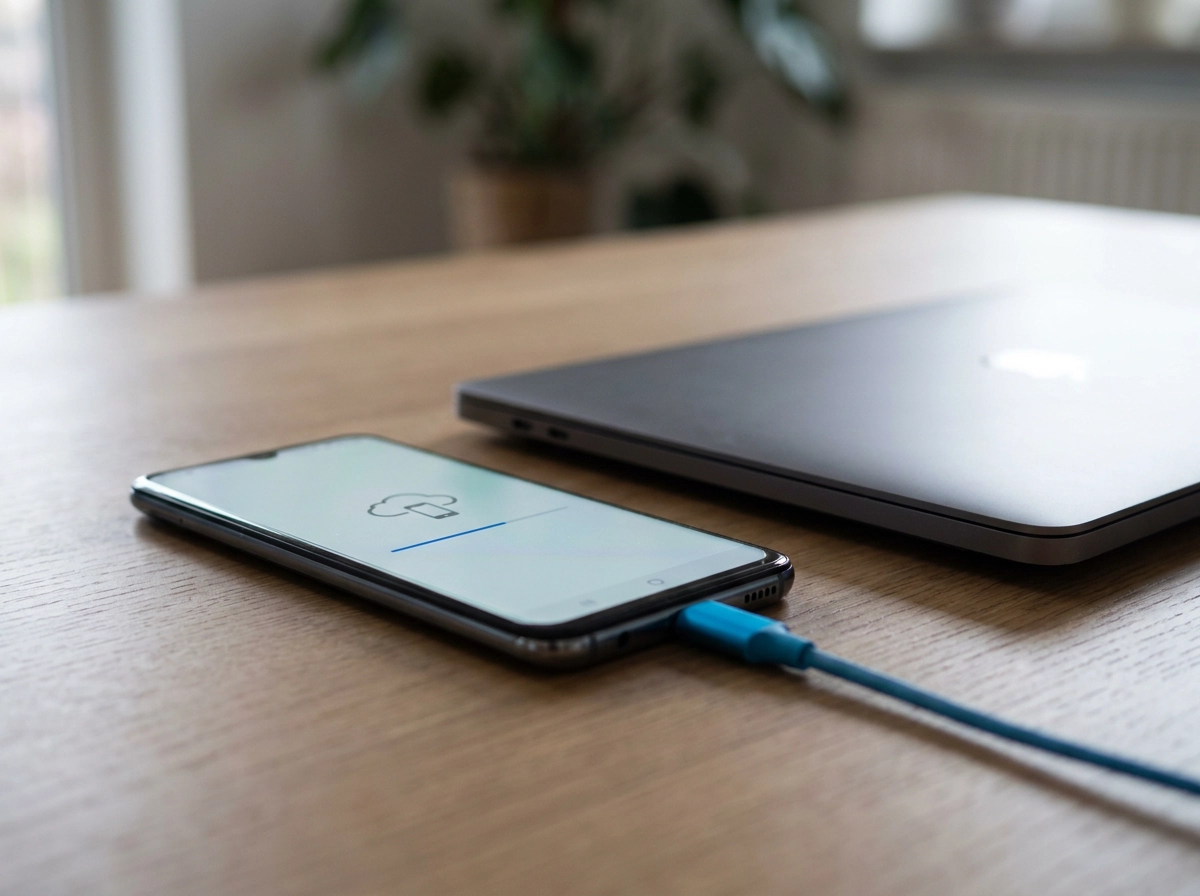
Back up first. Save to iCloud or a computer, confirm the backup finished, then check Photos, Messages and Contacts are actually there before erasing anything.
Sign out of Apple ID properly. Erasing alone isn't enough: turn off Find My iPhone and sign out of iCloud to remove Activation Lock. A phone still tied to an Apple ID can't be reset by anyone else.
This is the top reason sales stall. A phone locked to an inaccessible account is valued as a parts device, and the offer reflects that.
Document damage honestly. Photograph the screen, back glass, camera, edges and faults, and disclose replaced parts. Surprises at inspection get agreed prices revised down.
Tidy lightly. Update iOS if easy, remove the case and any lifting screen protector, charge above 50 per cent, and keep the original box or charger.
Being upfront doesn't cost you money. It gets you a faster, cleaner sale, because the buyer prices accurately from the start rather than padding for the unknown.
Sydney considerations: local buyers, pickup and safe payment
With it wiped and documented, the next question is who buys it. Sydney is a dense market for used iPhones, so offers to sell an old iPhone are generally competitive and sales reasonably quick. It also means your device competes against plenty of similar stock, which is why condition and storage detail matter.
Most sellers arrange a local meetup or pickup around work and travel patterns across the CBD, inner west, north shore, eastern suburbs and western Sydney. Confirm the arrangement before you erase anything.
Safety basics: meet in a public place or business premises, don't hand the phone over until payment is confirmed, and be wary of anyone pushing you to ship before funds clear. ACCC and NSW Fair Trading guidance on second-hand goods is a sensible disclosure checklist, and it applies to private sellers too.
A local buyer can assess the device before you commit, help confirm the exact model and storage, and give damaged or broken iPhones a path that marketplace listings often can't.
Check the details for your situation.
Your next step: turn the calendar into a decision
The calendar only pays off if you act on it.
Values bend hardest around the new-model launch and the post-Christmas supply wave, the drop hits unevenly across models and storage tiers, and delay is a cost, not a neutral default.
The test, in one line: a base model one to three generations old, at 128GB or below, or with condition issues, is likely outside its earning window, and waiting is working against you.
Move in order. Back up your data, remove your Apple ID and Activation Lock, document the condition honestly, then get a real quote before the next bend rather than after it.
Ready to see what your device is worth now and want a Sydney buyer to assess it? Request a quote.
The plain version: the best month to sell your iPhone in Sydney is the month you decide. The worst outcome is another year of a phone quietly losing value in a drawer.
Conclusion
The Sydney used iPhone market moves with the release calendar, not with wishful thinking. New model launches create the first price bend, and the post-Christmas supply wave creates the second. Your model age, storage tier, condition, and base versus Pro status determine how hard those bends hit. Waiting is rarely neutral; for older base models at 128GB or below, or devices with condition issues, it often means a smaller offer.
The best month to sell is the month you decide, prepare, and get a real quote. Back up your data, remove Activation Lock, document condition honestly, and confirm a safe local sale before you erase anything.
Ready to see what your iPhone is worth now? Request a quote from a Sydney buyer and turn the calendar into cash instead of another year in a drawer.